This is general info on OBD-0 ECUs. There is some tech in here but I won't go into how to actually chip an ECU. You can find that info here.
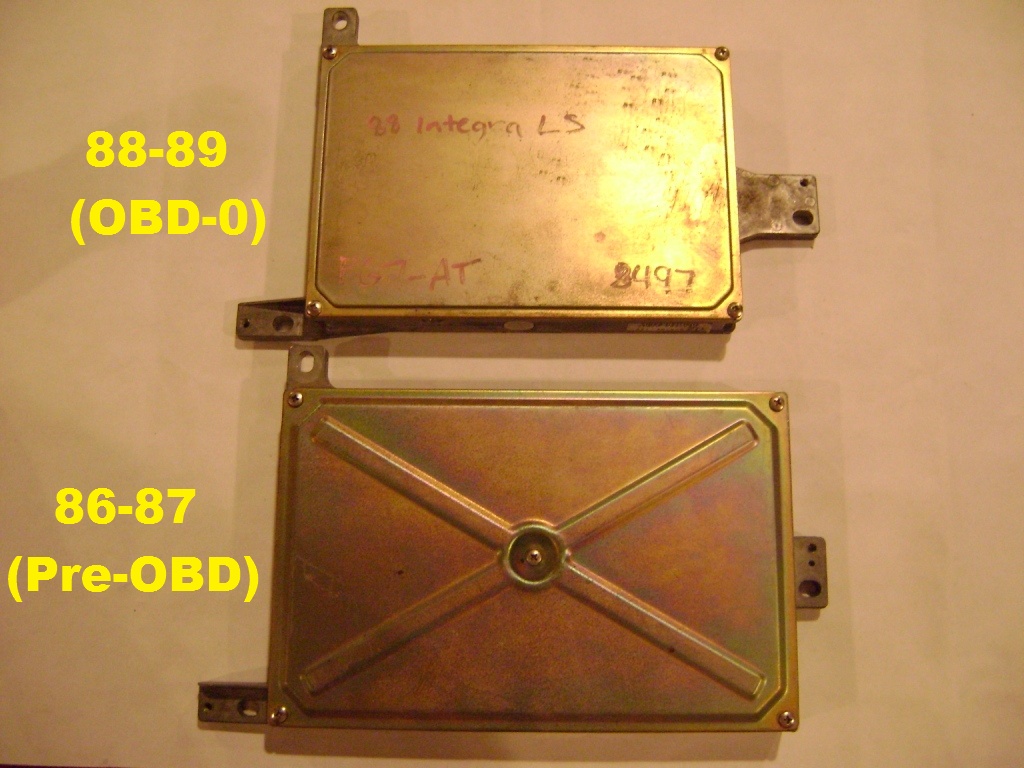
In a nutshell, OBD-0 is just how Honda enthusiasts refer to the generation of ECUs and related Fuel Injection system components from model years 1988 to 1991 (88-89 for Accords and some Preludes). Basically, all 88-91 Civics, CRXs and Integras come from the factory as OBD-0. 85-87 models would be "vacuum advance" and 92-95 models are OBD-1.
Probably the biggest advancement of OBD-0 over the previous 85-87 "vacuum advance" models was the fact that ignition timing was now electronically controlled (as opposed to the old vacuum/centrifugal advance system).
Nowadays, OBD-1 is considered by many to be the "go-to" platform when talking about programmable Honda ECUs. With everyone jumping on the OBD-1 bandwagon, the good old OBD-0 platform has pretty much been forgotten. However, there is still hope for these old ECUs. At least one OBD-0 ROM editor is still being actively developed and its features rival those of the big-name OBD-1 editors.
On 88-91 Hondas (and older "vacuum advance" cars, once converted to OBD-0, see here), staying with an older ECU keeps costs and complexity down as opposed to going the OBD-1 route. OBD-1 conversions require at a minimum a new OBD-1 compatible distributor, OBD-1 ECU, 4-wire O2 sensor and OBD-0 to OBD-1 harness jumper, and these parts are highly sought after and thus expensive. Keeping OBD-0 status eliminates these unnecessary costs without sacrificing much, if anything, in terms of tuning ability.
TurboEdit is a ROM editor that has been around for a few years, and has seen a lot of new features and development added in the last couple. It works on most 88-91 OBD-0 ECUs (once chipped) and allows you to tune for engine modifications ranging from minor bolt-ons to serious forced induction. Some of its more useful features are the ability to modify fuel/ignition maps, change rev limits, launch control, scaling for larger injectors/MAP sensors, and others. Its capabilities should be enough for most, save the most extreme big-power setups. You can find and download the most current release (which of this writing is version 3.2.2) on the pgmfi.org forums. It is free to download but you can also donate to the cause if you're feeling generous.
Maybe the biggest downfall of TurboEdit at this time is the fact that many tuners are not familiar with the program, and it may be hard to find someone who knows their way around it. That may change in the future if OBD-0 ROM editors like TurboEdit gain popularity.
There are a few different families of OBD-0 ECUs. Some of them include the PK1/PH3 Accord/Prelude ECUs, the Dual Point-injected PM5/PM9 Civic ECUs, the Japan-only DOHC VTEC PR3/PW0 Civic/Integra ECUs, and the MPFI non-VTEC PM6/PM7/PG7/PS9 Civic/Integra ECUs.
This article will focus on this last group of MPFI non-VTEC ECUs, as they are some of the most common and the most popular type.
Below is a list of some of the more popular OBD-0 ECUs, along with a short description:
There are others such as the CRX HF PM8, the Euro PP4/PP5s, and possibly more.
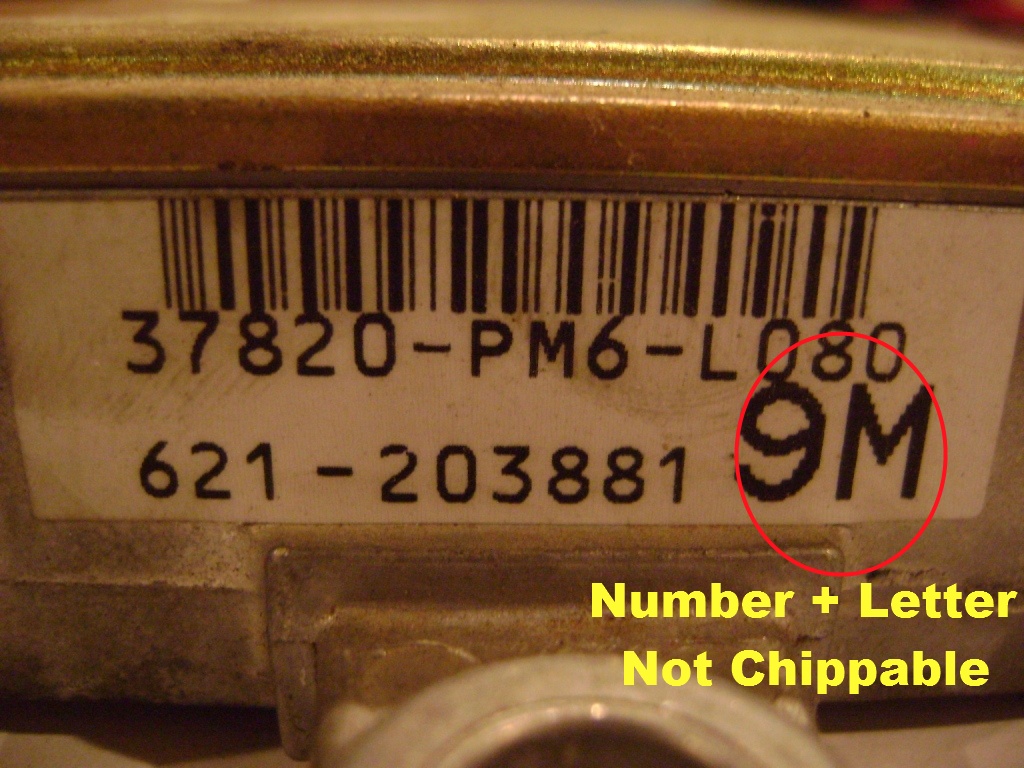
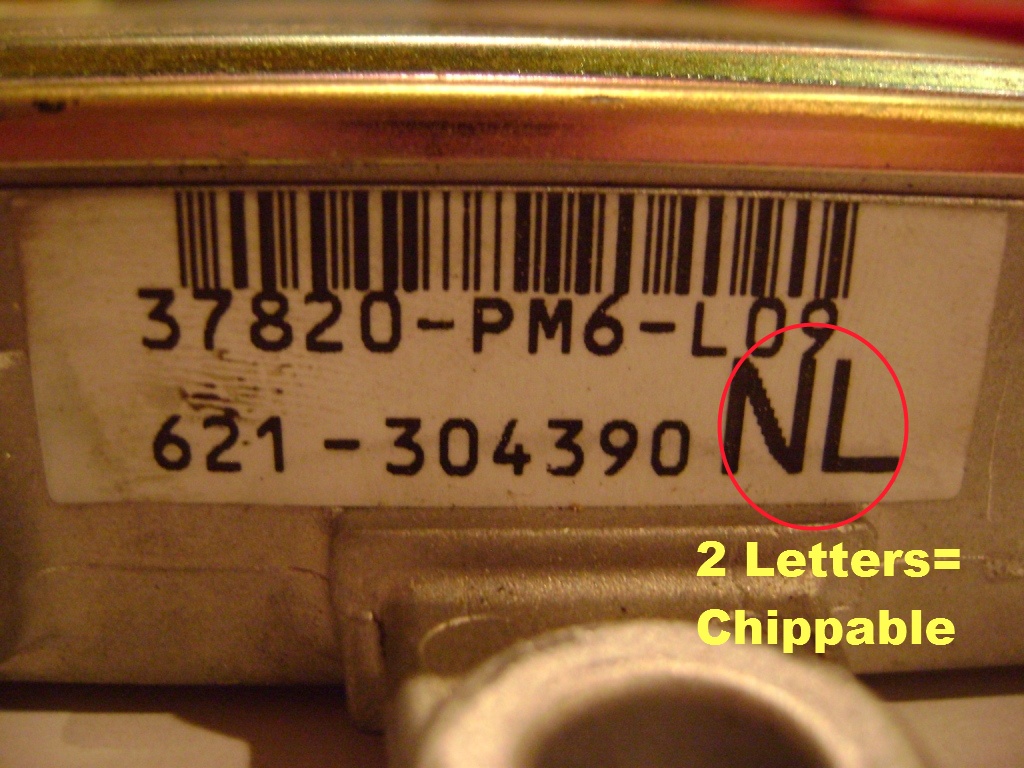
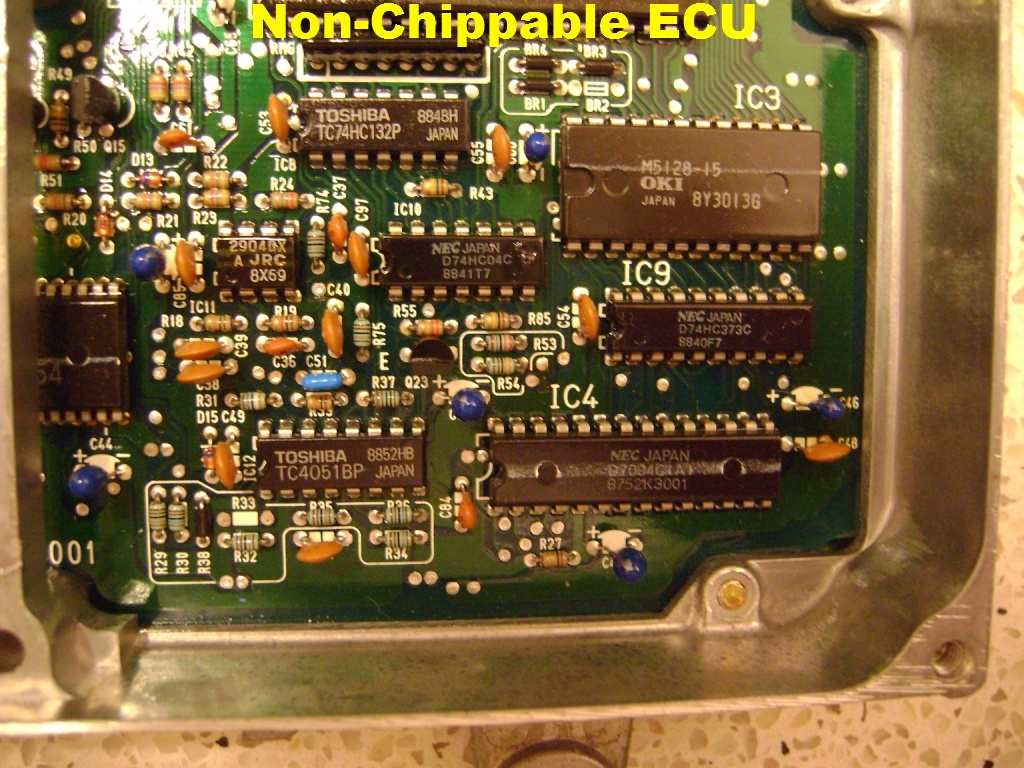
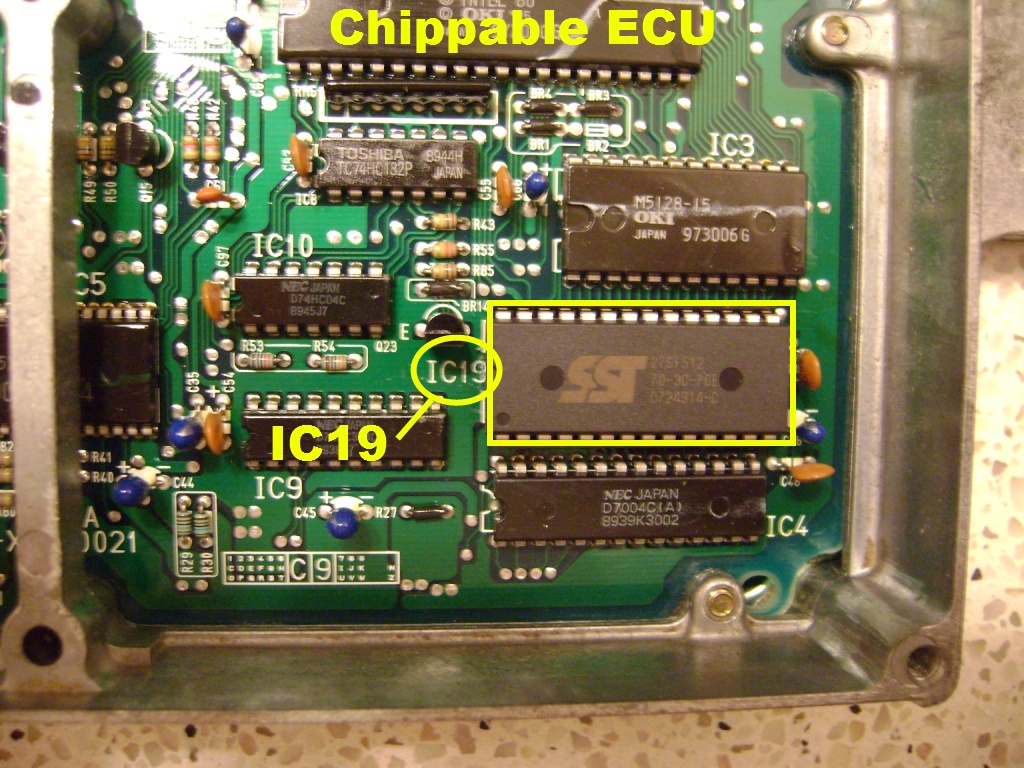
Below are some pictures that help identify non-chippable and chippable ECUs. Generally speaking, it's the 88-89 ECUs that are non-chippable and the later 90-91s that are.
Note that the early 88-89 ECUs ARE chippable...it's just a lot harder than the later ones. See here for more info.
A quick and easy way to check externally is by looking at the label. A number plus a letter at the lower right corner lets you know it's a non-chippable type. Two letters mean its chippable (external ROM).
Cracking open the ECU, look for "IC19" marked on the circuit board on the lower-right corner. If you see it, you've found the external ROM chip (this makes the ECU chippable).
These ECUs were built with two different case styles. One is the 88-91 Civic-style, which mounts up against the floorboard under the dash, and the other is the 88-89 Integra-style which mounts under the seat. Either case will accept any MPFI OBD-0 non-VTEC circuit board (except the PR4). This can come in handy when either running a PG7 in an 88-91 Civic (bolts in like stock) or installing a chippable PM6 in an 84-87 Civic/86-89 Integra.
To remove the board from its case, follow the steps below. Before peforming these steps, discharge any possible static electricity you are carrying by touching something metal. Static can damage the ECU or its components.
Remove the transistor heatsink brackets by taking off these screws:
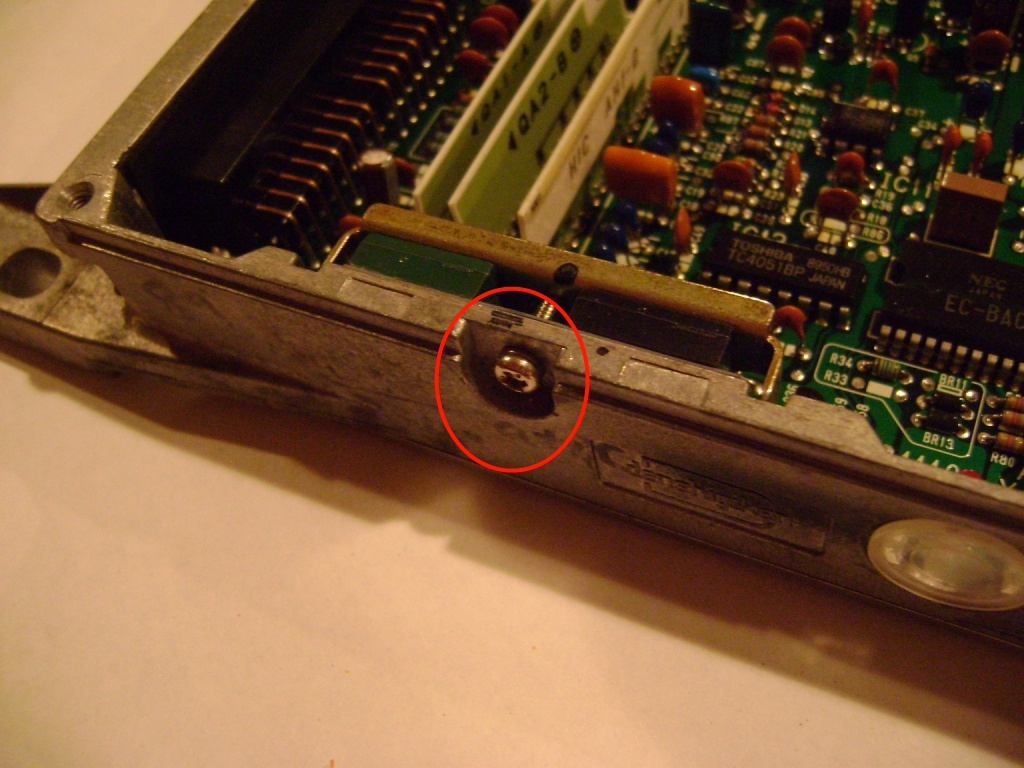
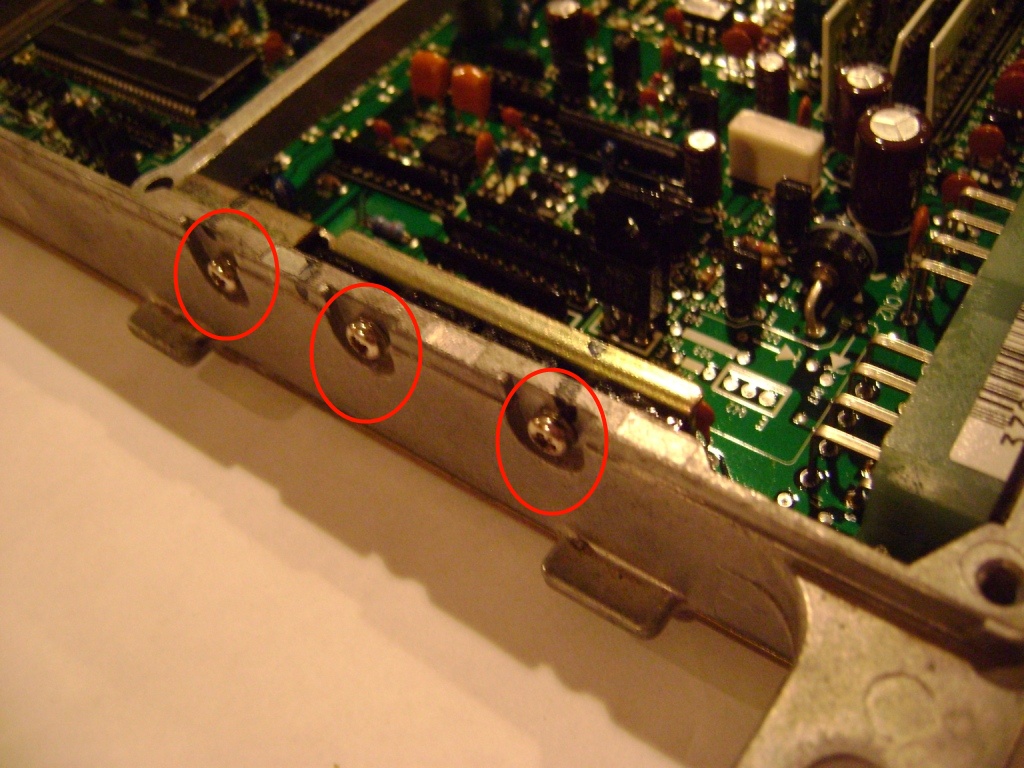
Next, take off the lower cover and remove the screws securing the board to the case (9 screws total):
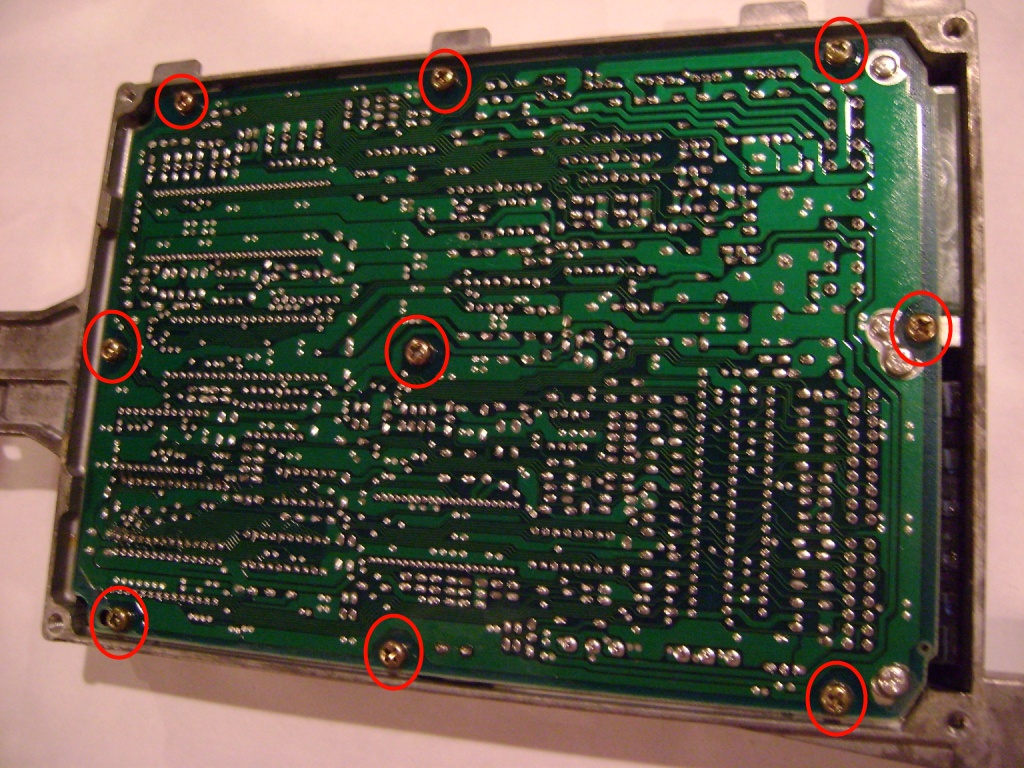
The board should now be free. Some gentle prying may be necessary since the board is probably stuck to the case.
Chipped PM6 in a PG7 case:
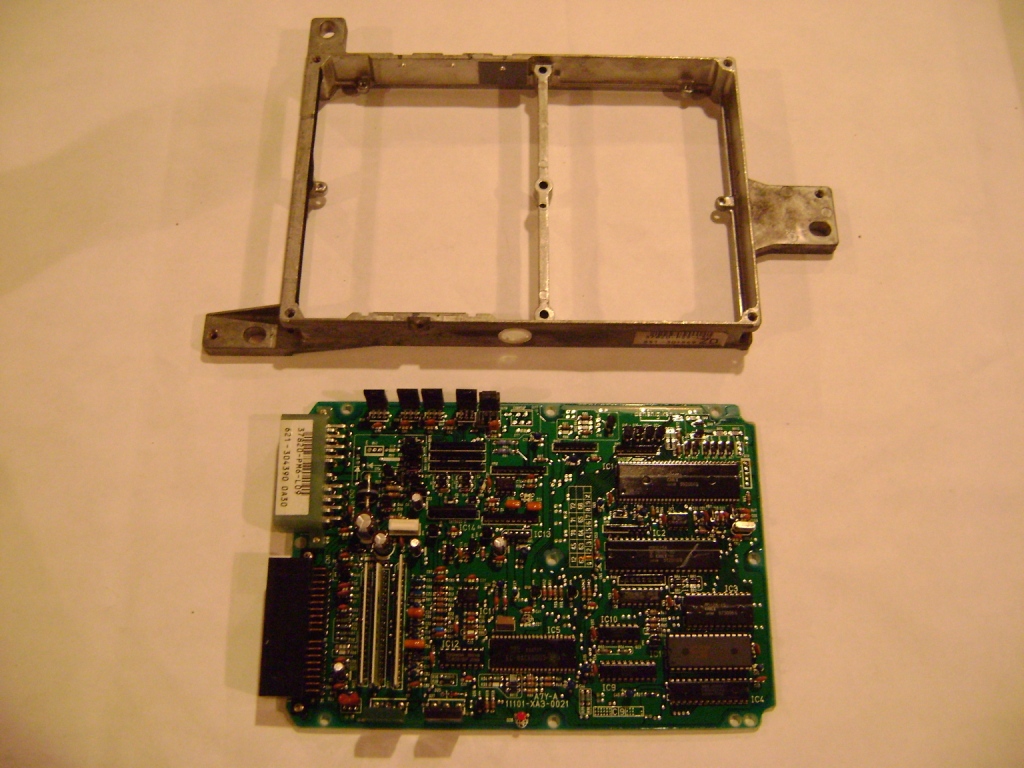
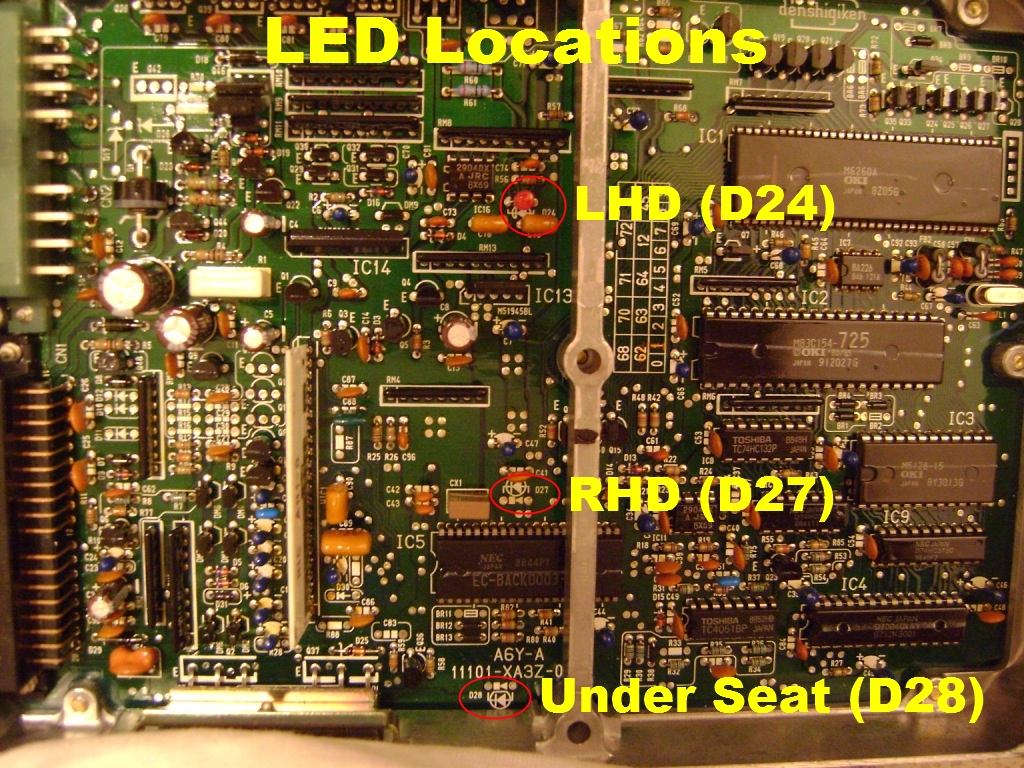
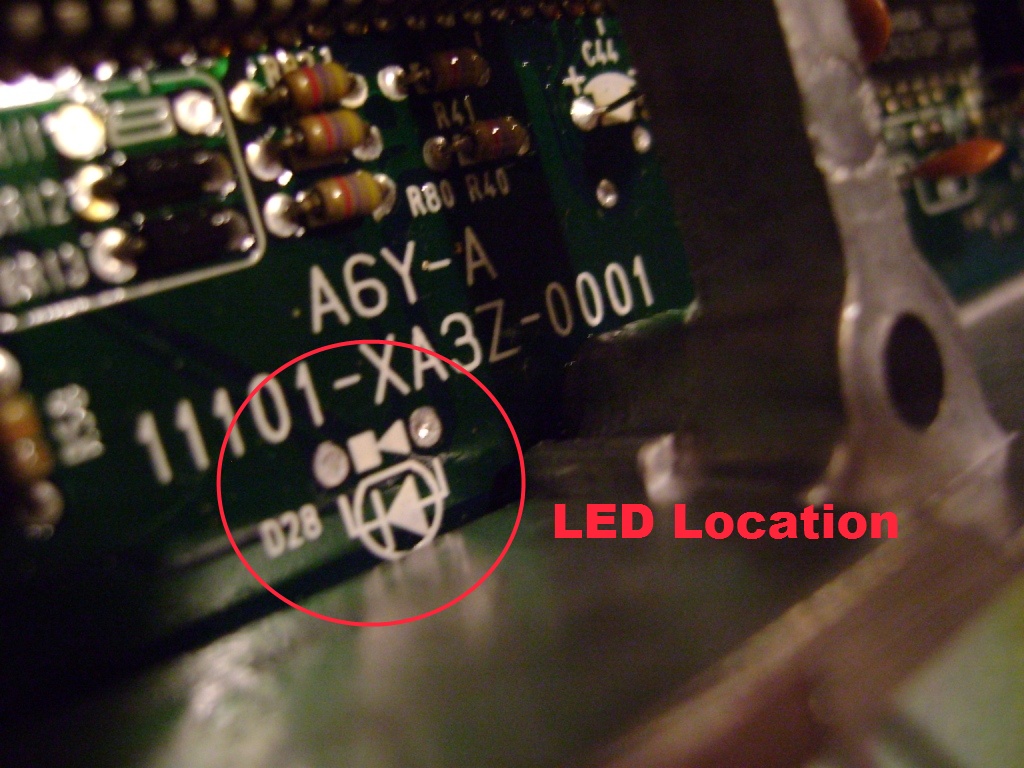
When swapping boards to different cases, make sure the Check Engine Light LED will still be visible. Left hand drive, right hand drive, and 88-89 Integras all have the LED on a different spot on the board. When you know which spot you'll use, de-solder the LED and move it there. See the pictures below.
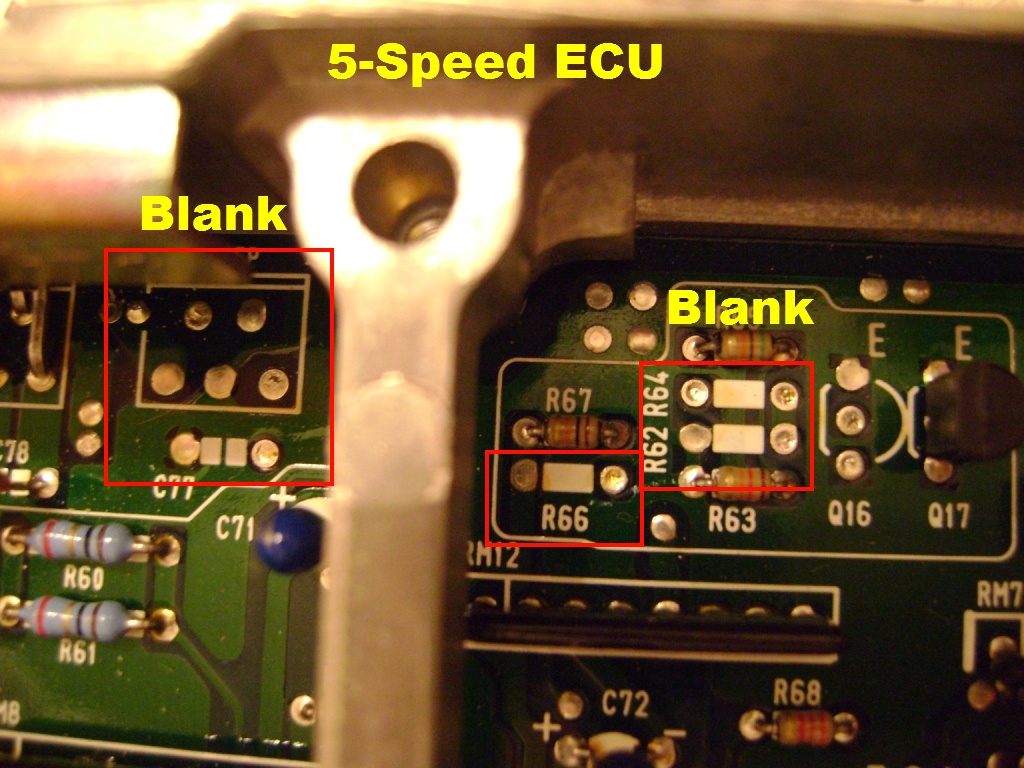
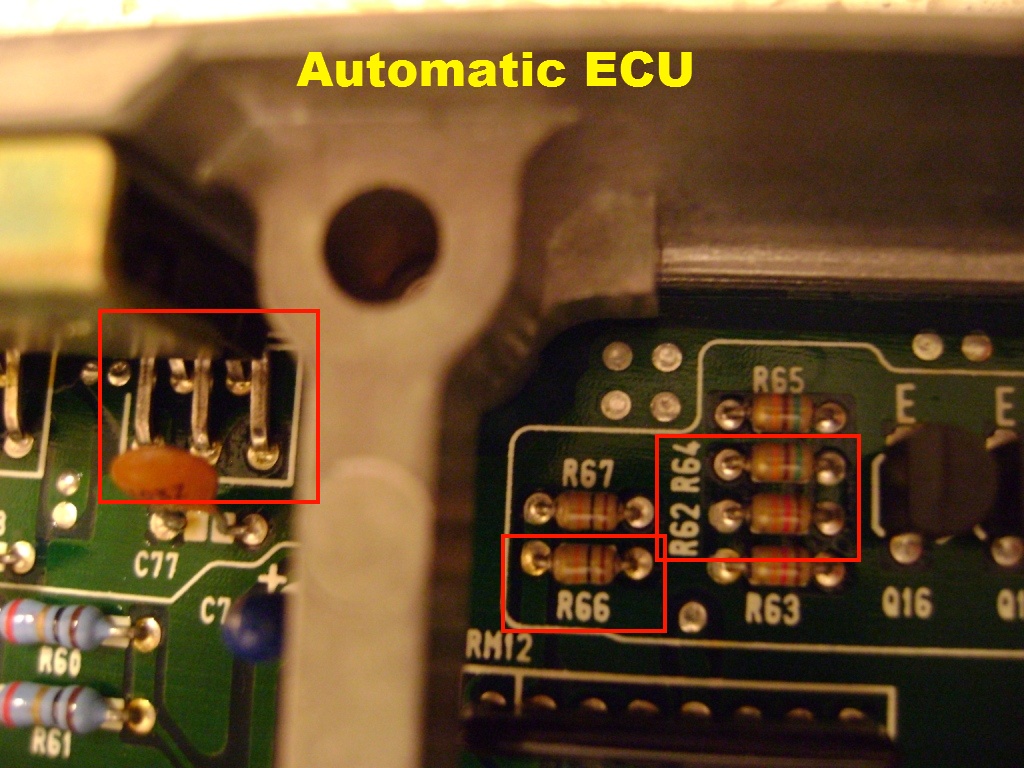
To distinguish an automatic ECU from a manual, look at the very top of the board towards the middle. An automatic will have resistors installed in spots R62, R64, and R66 (5-speed ECUs are empty). To convert from an auto to a manual, simply remove these resistors from the circuit board.
Manual to automatic ECU conversions are possible, but require quite a few components and are beyond the scope of this article.
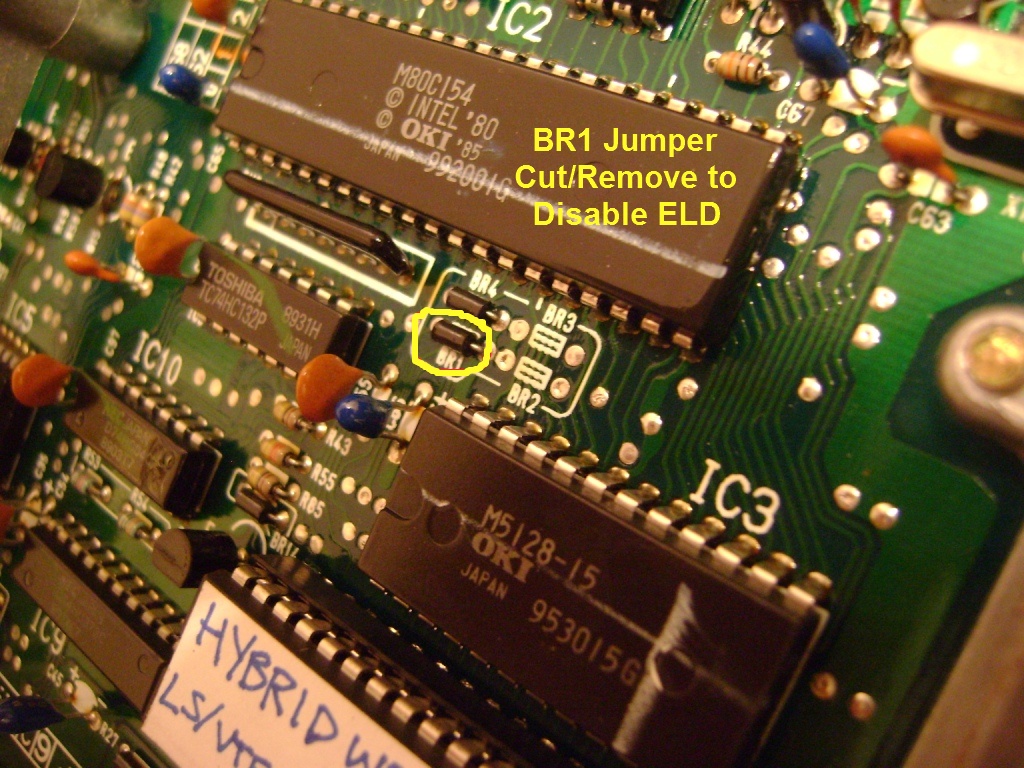
The Electronic Load Detector (ELD) circuit can be disabled on these ECUs. To do so, cut or de-solder the BR1 jumper on the board:
Here's some helpful info when shopping for PG7 ECUs:
The three digits before the serial number on the ECU label can tell you a lot about where it came from (PG7 only).
PG7 ECUs came in both 86-87 and 88-89 versions. The picture below shows you which is which.