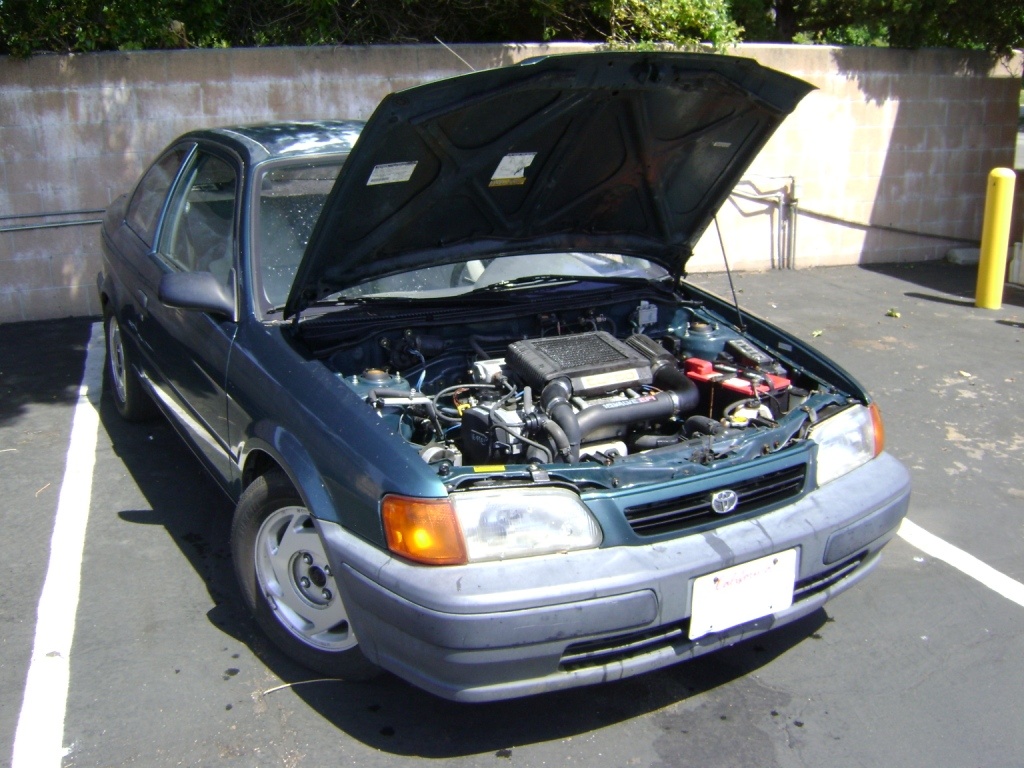
Tercel/Paseo 4E-FTE Swap

This is a bad ass swap. The 4E-FTE swap turns your everyday Tercel (or Paseo) from a boring, oil-burning turd into a fun, thrifty, and reliable ride that flies under the radar. It won't exactly take out Porsches and Corvettes, but it's no slouch either.
The 4E-FTE is a 1.3 liter DOHC inline-four, equipped with an intercooled Toyota CT9 turbocharger, putting out 135PS (133HP). It was a Japan-only engine available in Starlet GT Turbos from 1990-1995 and Starlet Glanza V from 1996-1999. While they were not imported into North America when new, they are fairly common from Japanese used engine importers. Being part of Toyota's "E" engine family, it is an easy drop-in swap into Tercels and Paseos already equipped with 3E and 5E engines.
Don't let the low (133HP) power rating fool you. With most Tercels weighing in at under 2,200 pounds, the 4E turbo swap gives them a power-to-weight ratio similar to Integra GSRs and 80's vintage TPI Camaros. More importantly, because of the CT9 turbo's small size, full boost arrives early in the RPM range and provides substantial mid-range torque for around-town driving and highway passing. Driving a 4E-FTE feels a lot more like a torquey V6 than the tiny four-cylinder it really is.
Suitable swap recepients include Tercels (FWD models) from 1987-1999 and Paseos from 1992-1999. If you already own a Tercel/Paseo, the 4E-FTE swap can give new life to an otherwise good car with a dead or dying engine. If not, decent examples can be found for sale at modest prices, since they don't sell for the same artificially inflated prices that comparable Civics and Corollas do. Many can be had for downright cheap, as the 3E engines in early models had a poor reputation for being oil burners. Also, a lot of Tercels also had EGR system woes and perpetually-lit Check Engine lights (the 4E-FTE does not use EGR).
While the 4E will physically bolt into these cars, early 87-90 models are carbureted and require fuel lines and tank to be swapped with parts from an EFI-equipped Tercel (certain '90 models only). Also, 97+ models use a returnless fuel system and need to have components from an earlier car swapped in to be 4E-compatible.
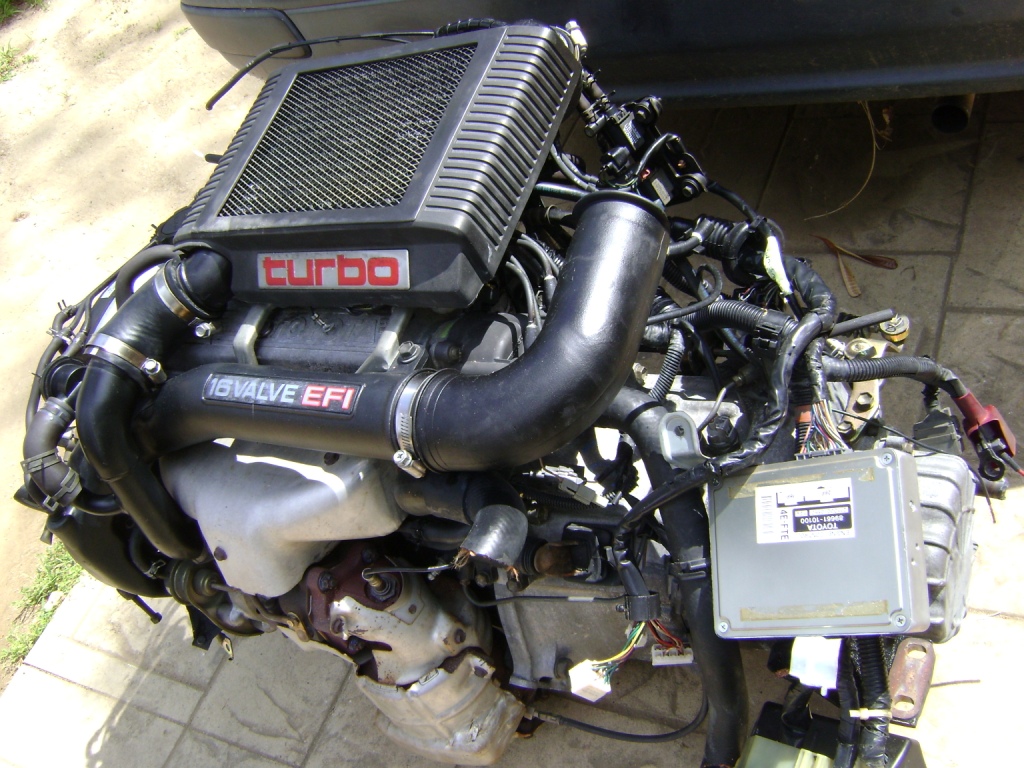
The following is some helpful info when shopping for a 4E-FTE. It is written with the assumption you are shopping for a COMPLETE swap. While it is possible to swap in just a 4E-FTE engine and keep the old 4MT/5MT/3AT/4AT transmissions, the 4E transmissions are beefier and have gear ratios ideally matched to the output of the turbo engine. It is also best to buy a complete setup for a good price than to have to find an ECU, harness, MAP sensor, coil/igniter and other stuff separately.
When looking for a 4E-FTE there are a few differences to be aware of. Most have to do with either model year, transmission type, or certain options. The most important difference is whether the electronics are of the 2-plug or 3-plug ECU variety. Generally, early 5-speed EP82 chassis-type engines are of the 2-plug ECU-type, which are easier to wire up. Automatic EP82s and some later EP91 chassis engines are 3-plug ECU-type and need substantially more wiring done. Some other differences beyond the obvious ECU and ECU plugs are the TPS, transmission controls (on automatics), and various other sensors. Before buying, make sure you know which type you are getting beforehand.
There are also other variables to look out for. Starlet Turbo transmissions equipped with a Limited Slip Differential may require different axles so it may be best to pass on those unless you know what parts are needed. Also, depending on the year, engines may have either "boot" type or "clip" type distributor caps and spark plug wires. Generally, very early engines (mostly pre-93) are boot-type, while most later ones use the more common clip-type parts. A trivial difference, but one to be aware of nonetheless, especially when you shop for replacement parts.
As far as the condition of any engine/swap you might be considering, most importers should be able to provide you with compression test and possibly leakdown numbers. If possible, it is best to buy from a local importer. That way, you won't have to worry about potential shipping damage to sensors and other hard-to-find 4E-specific parts. If you can see the engine in person, you can also check for certain things firsthand such as sludge buildup, signs of a blown head gasket, turbo condition, and any missing parts, among other things. Either way, you should be okay as long as the importer you buy from is a reputable seller (do your homework).
The following parts are needed to complete the swap. Items marked with an asterisk (*) should come with the engine/transmission.
Before dropping in the engine, you should seriously think about replacing a few maintenance parts. Below is a list of some of the more commonly needed parts and their applications. Keep in mind that some parts are Japan-only, so you may have to get creative in sourcing them. Speedvision CPS is a good source for these.
Items marked with an asterisk (*) are the minimum you should consider replacing.
Timing Belt and Components:
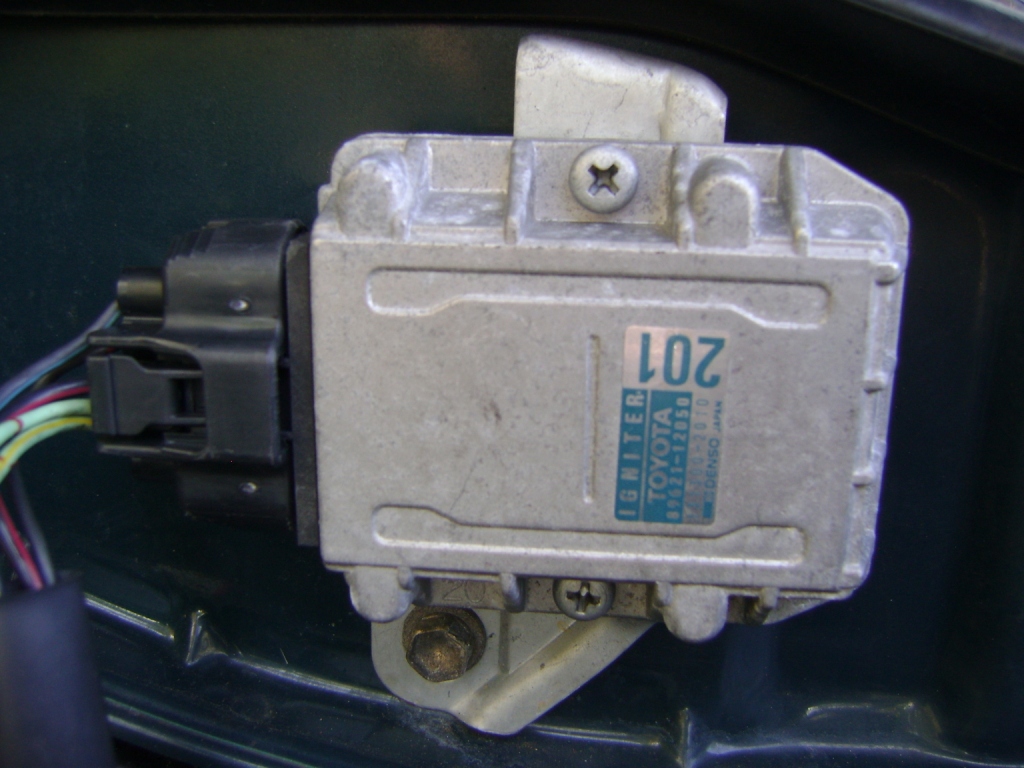
Ignition:
Clutch:
Miscellaneous:
*UPDATE 10/2025*
It has been about 16 years since I originally performed my first 4E-FTE swap. As such, I won't be able to provide a detailed guide on wiring a 4E-FTE. I've since lost a lot of the notes I had regarding the wiring for this swap. I will say, however, that the wiring was fairly straightforward once I had the proper information in hand. What worked for me was taking the info that was relevant to my Tercel out of the Factory Service Manual, and compared it to the pinouts I was able to find online that were specific to the EP82/EP91 ECUs. Then I just wired the engine harness so that the EP82 ECU would be happy and have everything it needed and expected to see.
As far as '91-'99 Tercels and Paseos go, you could really break their EFI systems down as follows:
Amd for our donor engines...
What this means is that, in the case of my 1996 Tercel, my injector wiring was already set up correctly and I only had to "backdate" my ignition system to use a distributor rather than the coil packs it originally came with. The way I did that was I used the distributor wiring out of the 4E-FTE engine harness and replaced the stock Tercel wiring, just as it appeared in the '92-'95 Paseo wiring schematics.
In a nutshell, if swapping in a 4E, just wire up your injectors and ignition like a '92-'95 Paseo. If you have a '92-'95 Paseo, the hard part is done! There are other small wiring differences that you'll have to address, but they should be obvious. The injectors and ignition system will likely be your biggest hurdles.
I should also mention that this wiring information pertains mostly to manual transmission cars and swaps. If you're dealing with automatic (especially 4AT) cars, you're on your own.
Here's a link to a cool website with some of the different 4E/5E ECU pinouts: EP BIBLE
Dropping the 4E in is as easy as re-installing the original 3E/5E engines. As such, I won't go into how to do it step-by-step, because you should already know how if you're attempting this swap. I will, however, tell you which mounts you need and some other minor stuff.
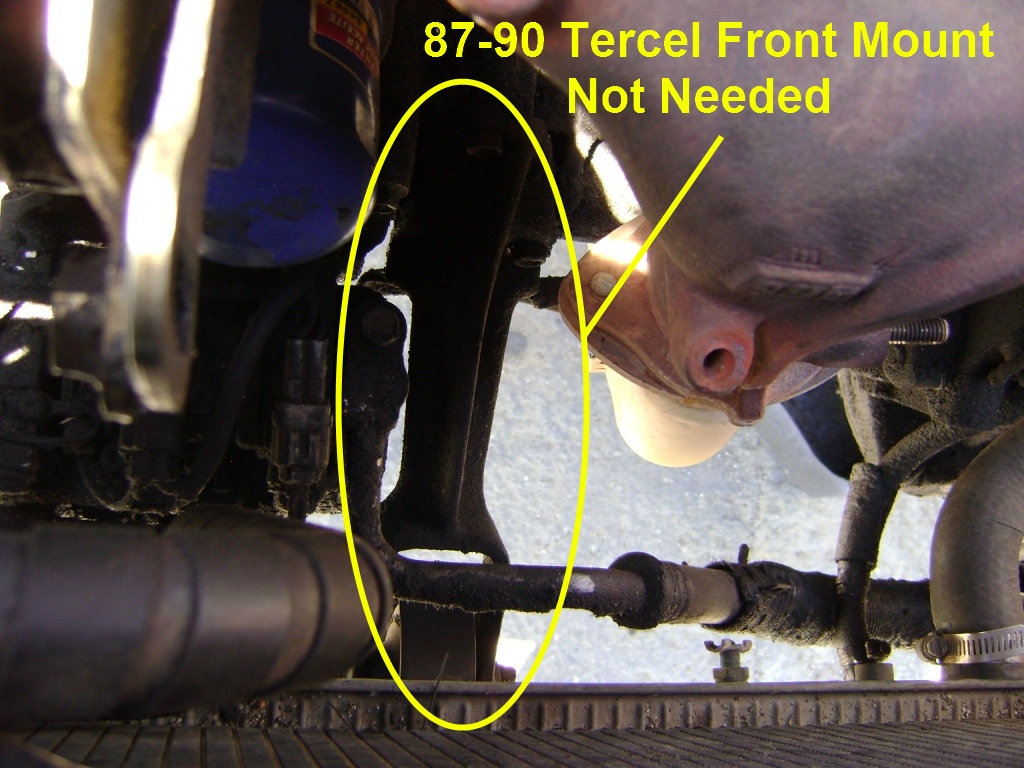
To finish up the installation, reinstall everything that was attached to the old swap. Shift cables, hydraulic clutch lines, axles, power steering and coolant hoses will all match up fine to the new engine.
Since the intercooler on 4E-FTEs is top mounted, you may want to think about cutting the stock hood to add a scoop. If not, the intercooler will clear an un-cut hood just fine. The intercooler will be pretty much useless, however.
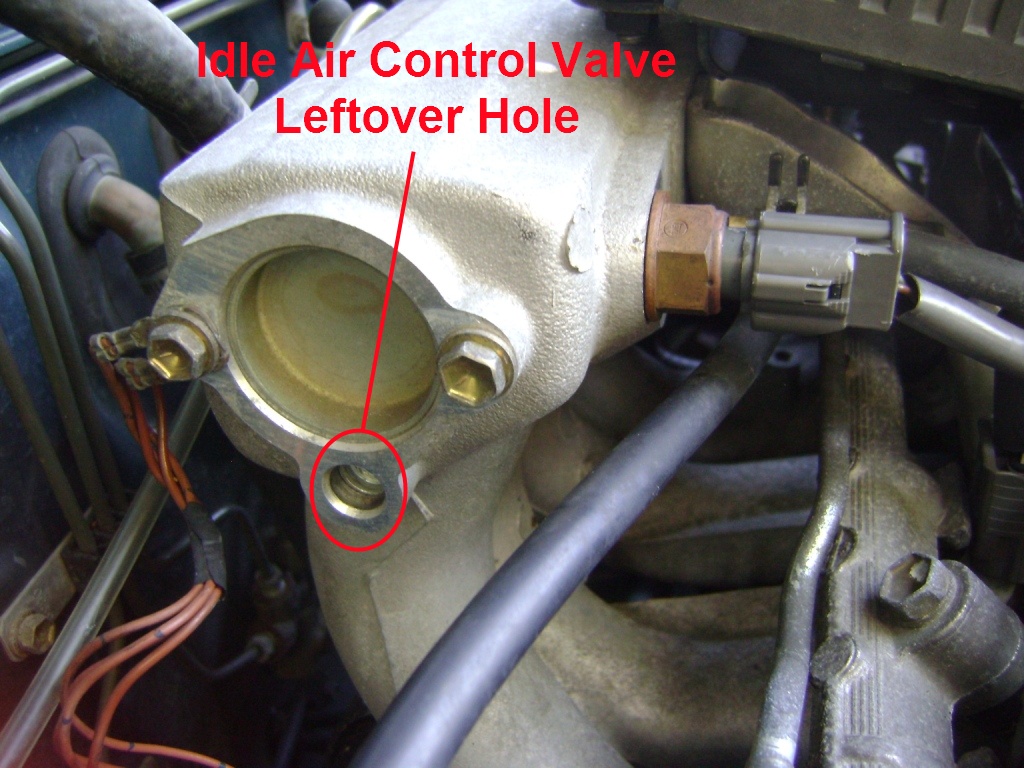
These are some random issues that I've experienced, and you may also run into:
Boost is addictive, no doubt about it. Once you get your new turbo Tercel up and running, you'll drive around for a while thinking all is fine and dandy until one day you get dusted by a new BMW. When that happens, it's time to start thinking about upgrades.
Thanks to a robust design and low 8.2:1 compression ratio, these little 4E-FTEs have been known to make big power on stock bottom ends. While the engines themselves are fairly beefy units, the major limiting factor on these engines is the stubborn ECU, tiny CT9 turbo, and just adequate fuel system. Still, that does not mean you can't squeeze a little more out of what's already there.
The first modifications will probably be a custom intake and exhaust right off the bat, since your 4E-FTE probably won't come with a stock airbox or exhaust anyways. This alone should make for a decent gain in power, especially on a turbo engine like this. After that, the next upgrade should be a good turbo timer, which will help keep your turbo alive by reducing the risk of oil "coking" and eventual starvation.
Next, you can start thinking about turning up the boost a bit, but first you must overcome a small obstacle. The stock ECU will panic if it sees boost past 11.5 psi (0.8 BAR) and engage fuel cut. To prevent this, you must install a device called a Fuel Cut Defencer, which fools the ECU into thinking it is below the fuel cut threshold (HKS or JAM are popular here). Even then, you should think twice about boosting much past 12-13 psi without supporting fuel modifications as you risk running too lean. To actually raise the boost level, you can use a boost controller (either manual or electronic) or an adjustable wastegate actuator (HKS or equivalent).
If you're still hungry for power, there are small things that can be done like a front-mount intercooler (FMIC) and aftermarket tubular turbo manifold. Still want more? Beyond this you will definitely need a turbo upgrade, such as a hybrid CT9 or the popular WRX TD04L. Fuel system mods are also mandatory at this point, and should consist of at least upgraded injectors and a way to control them (Apex'i SAFC or GReddy E-Manage). This should be enough for most, but luckily for those STILL craving more, the upgrades available for the 4E-FTE are pretty much endless.
When all is said and done, the 4E-FTE-powered Tercel or Paseo just may be the ultimate urban street fighter. It has the famous Toyota reliability that was missing from that oily old 3E, and yet still packs a punch. Capable of sub-7 second zero-to-sixty times, it will out-accelerate 85% of cars on the road (think snooty BMWs), while still delivering fuel economy figures well into the 30s. Combine this with cheap insurance, cheap and easy repairs, and the anonymity of driving an econobox, it's the perfect daily driver for a world full of Priuses and Bimmers, and people who suck at driving them.